When should you check your energy plan? Start with 1 July
Default electricity prices reset on 1 July, and market plan prices can change at other times. Here's when to compare your plan.
Nov 10, 2026

Photo by Scott Graham on Unsplash: https://unsplash.com/photos/5fNmWej4tAA
Electricity plans are not "set and forget". Default prices are reviewed every year, market offers can change in between, and a discount that looked good last spring may have quietly expired.
You do not need to compare every week. You do need a few reliable moments in the year — and a habit of opening the letter or email that says your prices are changing.
1 July is the big reset
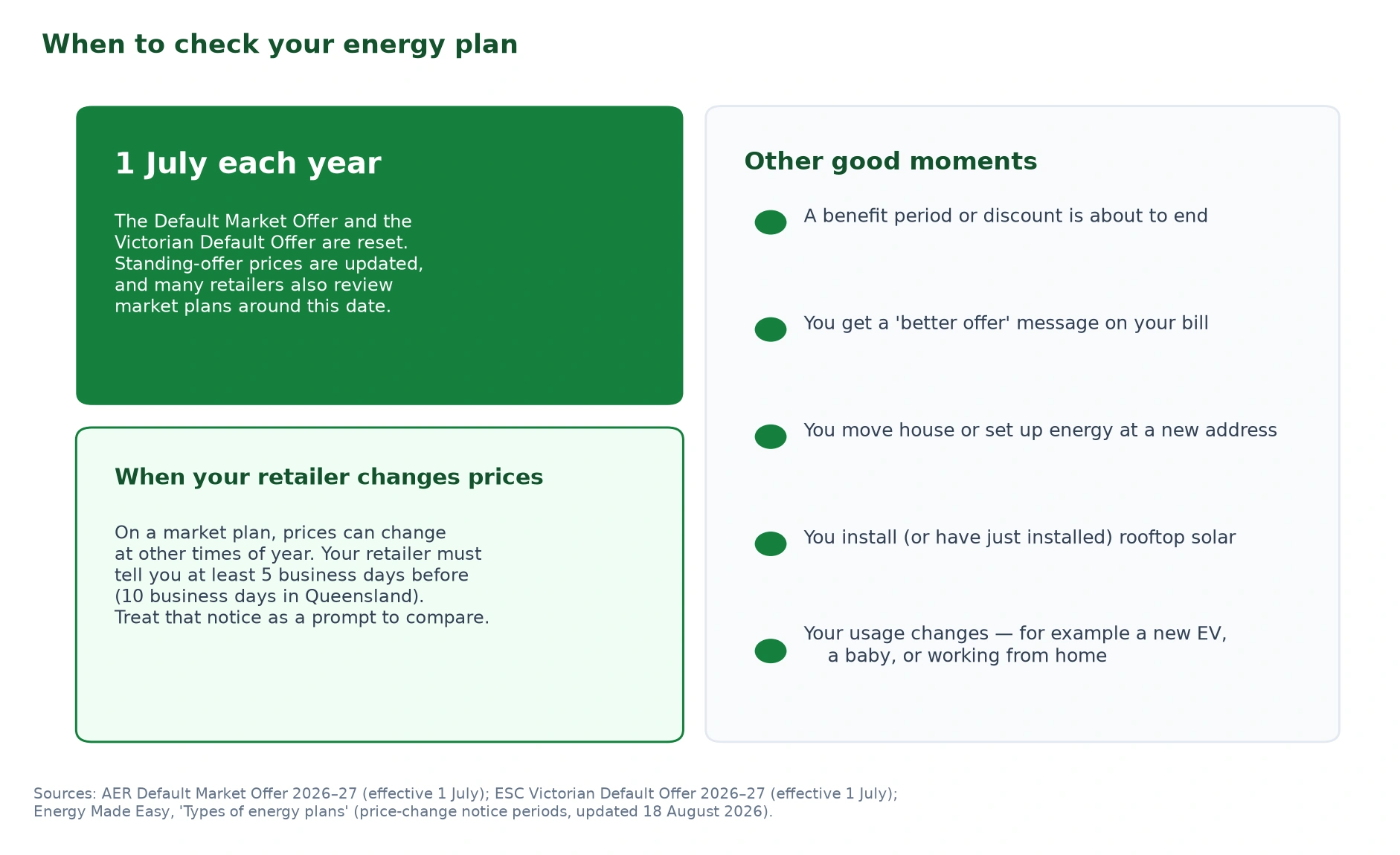
In New South Wales, south-east Queensland and South Australia, the Australian Energy Regulator sets a new Default Market Offer from 1 July each year. That annual price is then locked in for 12 months. The current offer applies from 1 July 2026 to 30 June 2027.
Victoria follows the same calendar for the Victorian Default Offer. The Essential Services Commission has set new default prices from 1 July 2026 to 30 June 2027.
If you are on a standing offer, those are the dates your default price is updated. Many retailers also review their market plans around the same time, because the default offer is the benchmark they have to advertise against. It is a natural point to check whether you are still on a good deal — not because 1 July is magical, but because the official prices, and often the market around them, have just changed.
Don't wait if your retailer changes prices sooner
On a market retail plan, prices are set by the retailer and can change at other times of year, even shortly after you sign up. Energy Made Easy is clear about this: "fixed term" is not the same as "fixed price". Prices can go up.
If your price is changing, the retailer must tell you at least 5 business days before the change, or at least 10 business days before if you live in Queensland. The notice should say when the price will change and what the charges are before and after.
Treat that notice as a prompt to compare, not just as a bill shock in waiting. Check the new rates against other generally available plans for your usage.
Sources: AER Default Market Offer 2026–27 (effective 1 July); Essential Services Commission, Victorian Default Offer 2026–27 (effective 1 July); Energy Made Easy, "Types of energy plans", updated 18 August 2026.
Other good moments to compare
A benefit period — Energy Made Easy also calls it a fixed benefit period — is the set time you get a particular benefit, such as a discount for the first 12 months. When that period ends, the benefit can disappear even if the contract continues. If your plan has one, note the end date and compare before it lapses.
Watch your bill for a "better offer" message as well. Retailers are required to tell you, from time to time, if they have a cheaper plan for your usage. South Australia's energy bill guide notes that this message is generally provided every 100 days. It only covers your current retailer's plans, so it is a starting point, not the whole market.
Other natural triggers:
You move house or set up energy at a new address (the new property has a different NMI, and often a different set of plans).
You install rooftop solar. energy.gov.au notes that your retailer may automatically change your pricing plan, and that the new plan may not be the best one for you.
Your usage changes in a lasting way — a new electric vehicle, a baby, or a shift to working from home.
After a single estimated bill, it is also worth waiting for an actual meter read before you treat the usage as gospel, then compare once you have a solid picture.
A simple yearly habit
A practical rhythm is: compare around 1 July, compare again if you get a price-change notice or a better-offer message, and compare when something in your home actually changes. Use Energy Made Easy or Victorian Energy Compare, and rank plans by estimated yearly cost for your usage — not by a headline percentage off the reference price.
If you'd rather not run the comparison yourself, send us the bill and we will.
We can check it for you
Bill Ninja checks electricity and gas bills for homes and small businesses in New South Wales, Queensland, South Australia, Tasmania, the ACT and Victoria. We use the government's free comparison sites, put no-conditions plans in the headline, and usually email a plain-English report within about 24 hours. No upfront fee, no card, no retailer commissions. If we find a saving and you're happy, tip what feels fair.